
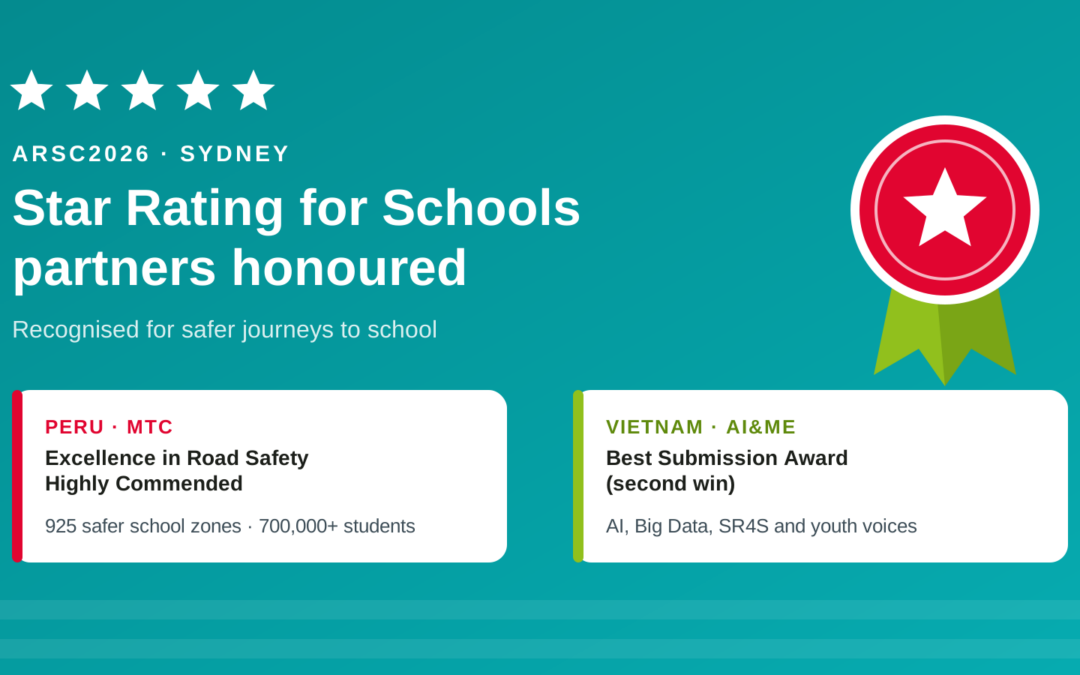
Two programmes built on the Star Rating for Schools (SR4S) methodology took home major honours at the 2026 Australasian Road Safety Conference (ARSC), held in Sydney from 26 to 29 October.
Peru’s national safe school zones programme and the AI&Me project in Vietnam were both recognised by judges for measurable, scalable work protecting children on their journeys to and from school. Together they show how one consistent, evidence-based way of assessing risk can be put to work in very different settings, from a national ministry rollout to a youth-led, AI-powered initiative.
Peru: safer school zones at national scale
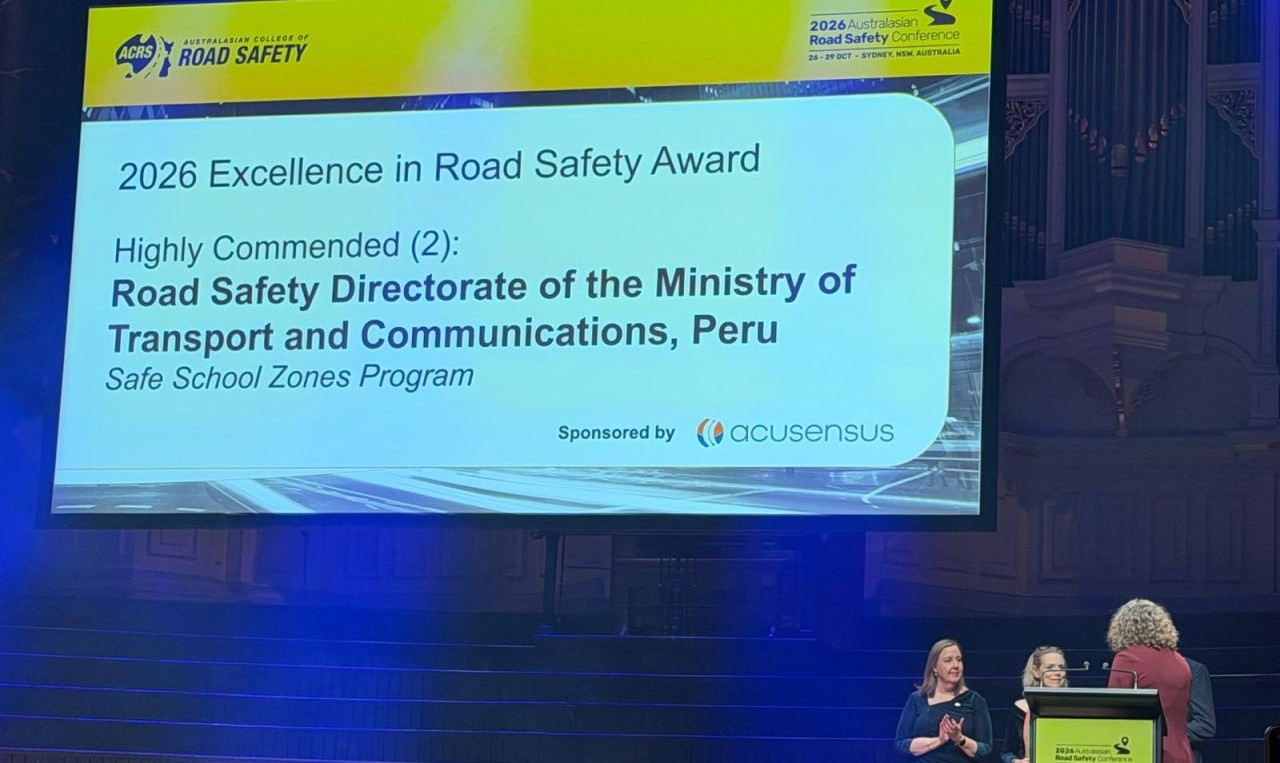
The Road Safety Directorate of Peru’s Ministry of Transport and Communications (MTC) received the Australasian College of Road Safety (ACRS) Excellence in Road Safety Highly Commended Award.
The MTC has made SR4S the backbone of a national programme for safer school environments. In its first phase, the Ministry supported 52 municipalities to deliver 925 safer school zones, benefiting more than 700,000 students. The programme has since grown to 141 municipalities.
The model is also travelling beyond the school gate. The MTC is adapting the same approach to the streets around health centres, another place where people on foot are especially exposed.
What makes Peru’s programme stand out is its use of the full SR4S cycle:
- Measure the risk children face on the roads around each school, using a star rating from 1 (highest risk) to 5 (lowest).
- Prioritise improvements such as crossings, footpaths and speed management where they will do the most good.
- Monitor the result by re-rating after works are complete, so councils and communities can see the change.
The award follows the programme’s earlier Prince Michael International Road Safety Award, further confirming Peru as a global reference point for school road safety. Congratulations to the MTC and every participating municipality and partner.
Vietnam: AI&Me wins Best Submission, again
AIP Foundation and the AI&Me project received the conference’s Best Submission Award, the second time the initiative has earned this honour.
AI&Me is led by AIP Foundation in partnership with iRAP, Youth for Road Safety (YOURS) and local government partners, with support from Fondation Botnar, FIA Foundation and Google.org. It combines four ingredients:
- Artificial intelligence and Big Data to spot risk across large road networks
- The SR4S methodology to rate and compare school journeys consistently
- The Youth Engagement App, which captures what students experience and worry about on their way to school
- Local government partners who turn the findings into targeted upgrades
The result is a programme where data and young people’s voices point to the same places, and where improvements can be made faster and with greater confidence. It is a powerful example of SR4S working alongside new technology, rather than being replaced by it.
Congratulations to AIP Foundation, Linh Nguyen and every AI&Me partner. Read more about AI&Me.
Celebrating the wider iRAP family
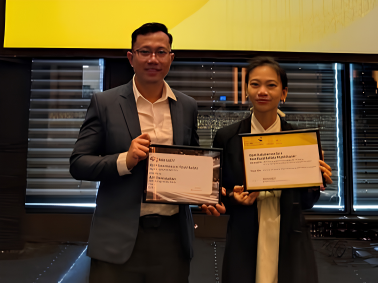
The SR4S winners were part of a strong showing for iRAP partners in Sydney. Read the full round-up of iRAP partner awards at ARSC2026.
What these awards say about SR4S
Peru and Vietnam took very different paths, but both proved the same point: when risk around schools is measured the same way everywhere, it can be fixed, tracked and scaled. One programme grew through national government leadership; the other through technology and the voices of young people. Both put children’s safety at the centre.
These are exactly the outcomes SR4S was built for. It is an evidence-based tool that cities, NGOs, school communities and ministries can use to assess school journeys, choose the right treatments and show the difference those treatments make.
Inspired to start a programme in your community? Explore the SR4S app and resources or get in touch with the team to find out how to assess the schools near you.
 English
 Português do Brasil
 Español de Colombia
 Français
 हिन्दी
